

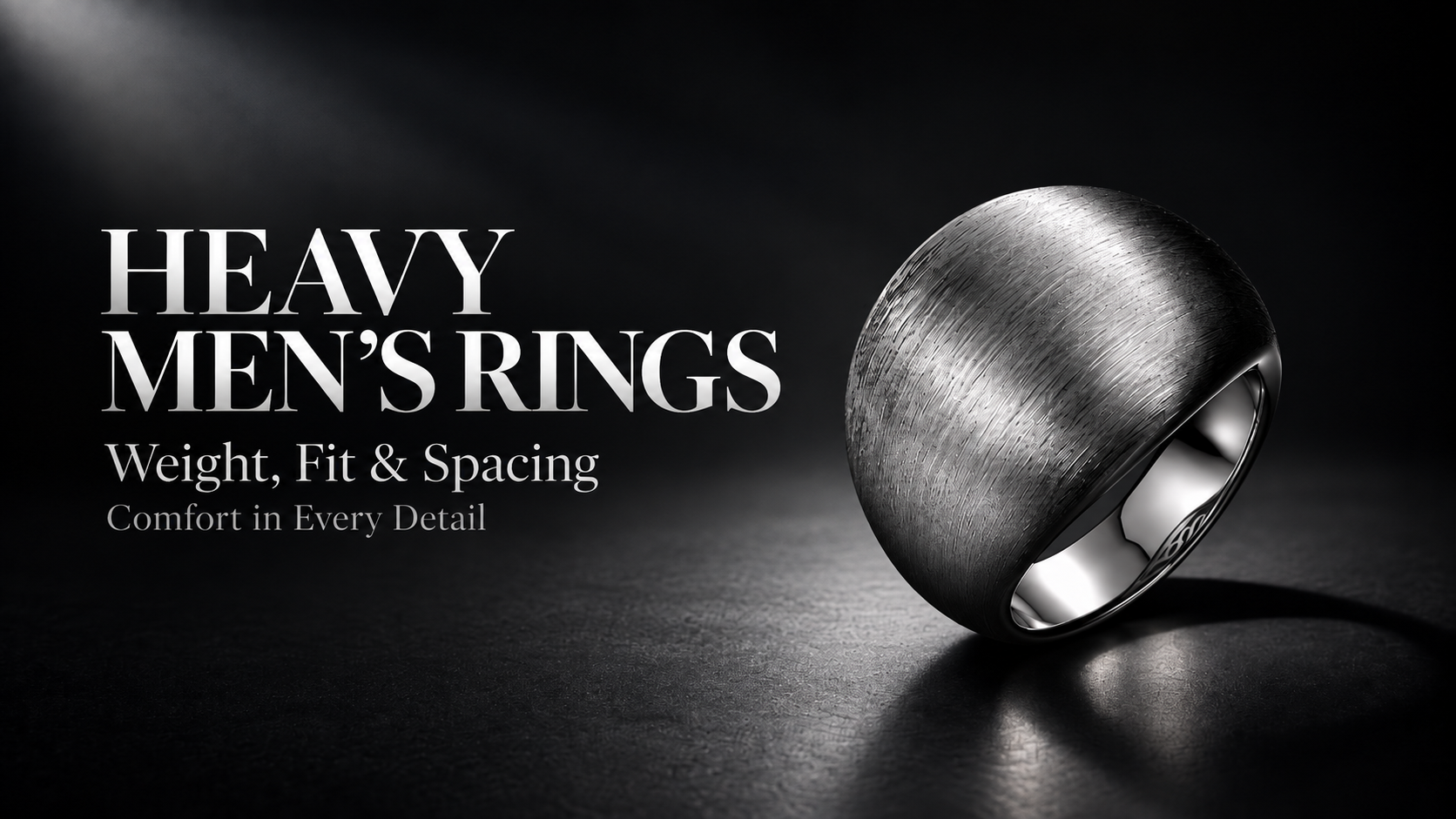
Meta Description: Discover how weight, fit, and finger spacing affect comfort in heavy men’s rings. Get tips to choose a secure, balanced, easy-to-wear ring.
Heavy men’s rings have become a defining part of modern masculine style. From bold signet rings and wide sterling silver bands to sculptural statement pieces, a substantial ring can add character and presence to even the simplest outfit.
But visual impact is only part of the equation.
A ring that looks impressive but feels uncomfortable will rarely become an everyday piece. Weight, fit, band width, thickness, and the space between your fingers all influence how a heavy ring feels throughout the day.
Understanding these factors can help you choose a ring that feels secure and substantial without becoming distracting or uncomfortable.
How Ring Weight Affects Comfort
There is no universal weight that officially makes a ring “heavy.” The feeling depends on the ring’s material, dimensions, design, and even the size of the wearer’s hand.
A wide solid ring will naturally feel more substantial than a slim band, while large signet faces and detailed sculptural designs can add additional weight.
Common materials used in substantial men’s rings include sterling silver, gold, stainless steel, and tungsten. Each offers a different balance of density, durability, appearance, and feel.
For many men, some weight is actually desirable. A substantial ring can feel solid, premium, and secure on the hand.
Too much weight, however, may become noticeable during long periods of wear. A very heavy ring can rotate around the finger, interfere with hand movement, or simply feel tiring if you are not accustomed to wearing jewelry.
If you are moving from lightweight jewelry to heavier rings, begin with a moderate size and wear it for shorter periods. Most wearers quickly become accustomed to additional weight when the ring is properly balanced and fitted.
Fit Is the Foundation of Ring Comfort
Even a beautifully designed ring will feel uncomfortable if the size is wrong.
A well-fitted men's ring should feel secure without squeezing the finger. It should slide over the knuckle with slight resistance and stay comfortably in position during normal movement.
A ring that is too loose may rotate or slide excessively. This is especially noticeable with heavy signet rings because their larger tops can naturally pull toward one side.
A ring that is too tight may create pressure, restrict movement, or become uncomfortable as your fingers naturally change size throughout the day.
Temperature, activity, hydration, and seasonal conditions can all affect finger size slightly.
For this reason, measuring your finger professionally—or using an accurate ring sizing tool—is particularly important when buying wider or heavier rings.
Wider Rings May Require a Different Fit
Band width plays an important role in sizing.
A narrow ring contacts only a small area of the finger, while a wide band covers considerably more skin. Because of this increased contact area, wide rings often feel tighter than narrow rings in the same nominal size.
Heavy men’s rings with wide bands may therefore require slightly more room than thinner styles.
Thickness matters as well. A thick ring can feel more substantial between the fingers and may affect how naturally your hand closes.
When choosing a bold ring, do not judge the fit only by the numerical ring size. Consider how the overall width and thickness interact with your hand.
Finger Spacing Matters More Than You Might Think
Finger spacing is often overlooked when selecting men's rings.
A wide ring does not only contact the finger wearing it. Its edges may also come close to—or touch—the neighboring fingers.
For some hands, this feels completely natural. For others, an especially wide or thick ring can create pressure between the fingers.
Hand anatomy varies significantly from person to person. Some people naturally have more space between their fingers, while others have fingers that sit closely together.
This is why the same wide ring may feel effortless on one hand but noticeable on another.
If you regularly wear large signet rings, gothic rings, or heavy silver bands, consider where the widest part of the ring sits when your fingers are relaxed.
Ideally, the ring should have enough presence to make a statement without constantly rubbing against neighboring fingers.
Choosing the Right Band Width for Your Hand
There is no single ideal band width for every man.
Larger hands often accommodate wider rings naturally, while men with smaller hands or closely spaced fingers may prefer slightly narrower designs.
That does not mean smaller hands cannot wear bold rings. Proportion and design balance matter more than simply choosing the largest possible piece.
A ring with a substantial face but a carefully tapered band, for example, can provide strong visual presence while reducing bulk between the fingers.
This type of construction is particularly useful for statement rings designed for regular wear.
Wearing Multiple Heavy Rings
If you like wearing several rings at once, spacing becomes even more important.
Two large rings worn on adjacent fingers may rub against one another as the hand moves. Over time, this can become uncomfortable and may also cause additional surface wear.
Instead, consider distributing statement rings across different fingers or hands.
For example, a bold signet ring can be paired with a narrower band on another finger rather than placing two equally wide rings directly beside each other.
The goal is to create visual balance while allowing your fingers to move naturally.
Comfort Fit vs. Standard Fit
The interior shape of a ring also affects comfort.
A traditional flat interior sits evenly against the finger. A comfort-fit interior, by comparison, uses a slightly rounded inner surface.
This rounded profile can reduce the amount of metal pressing directly against the skin and may make wider rings easier to put on and remove.
Comfort-fit construction is especially useful for substantial rings designed for extended wear.
However, interior shape is only one part of the equation. Correct sizing remains essential.
Edge Finishing Makes a Difference
The edges of a ring have a major influence on everyday comfort.
Sharp or poorly finished edges can create pressure against neighboring fingers, particularly on wide bands.
Well-designed heavy rings usually use softened, beveled, or carefully polished edges to reduce friction while maintaining the ring's structure and visual definition.
This is one reason craftsmanship matters when choosing substantial jewelry.
A heavy ring should feel intentionally solid—not simply bulky.
Consider Metal Sensitivities
Comfort is not only about weight and shape.
Metal composition can also affect how a ring feels against the skin. Some people are sensitive to certain metals or plating materials.
When choosing a ring for frequent wear, check the material specifications and choose jewelry from a trusted maker.
Sterling silver remains a popular choice for men's rings because it combines substantial feel, detailed craftsmanship, and a versatile appearance that works with both polished and oxidized finishes.
Proper cleaning and care can also help keep the interior of the ring comfortable against the skin.
Practical Tips for Choosing a Comfortable Heavy Ring
When possible, try a heavy ring before buying it or carefully compare its dimensions with rings you already wear comfortably.
Pay attention to more than the size number.
Consider:
- The overall weight of the ring.
- Band width and thickness.
- The size of the ring face.
- Space between neighboring fingers.
- Interior shape and edge finishing.
- How easily you can open and close your hand.
- Whether the ring rotates during normal movement.
Your daily routine matters as well.
Someone who works primarily at a desk may comfortably wear a larger statement ring for most of the day, while someone who regularly handles tools, exercises, or performs physical work may prefer removing heavy jewelry during those activities.
A ring should complement your lifestyle rather than interfere with it.
Maintaining Comfort Over Time
Regular care helps preserve both the appearance and comfort of a ring.
Dirt, oils, and residue can collect inside a ring over time, especially with detailed or textured designs. Periodic cleaning helps keep the inner surface smooth and comfortable.
You should also check the fit occasionally.
Finger size can change over the years, and a ring that once fitted perfectly may eventually become too loose or too tight.
If the change is significant, consult an experienced jeweler to determine whether resizing is appropriate for the specific design.
Finding the Right Balance Between Presence and Comfort
The appeal of heavy men’s rings comes from their presence.
A substantial sterling silver signet, sculptural band, or statement ring can communicate confidence and individuality in a way that smaller jewelry often cannot.
But bigger is not automatically better.
The best heavy ring balances visual weight with thoughtful proportions, correct sizing, comfortable spacing, and refined construction.
When choosing your next ring, consider how it feels when your hand is relaxed, moving, and naturally closed—not just how it looks in a product photo.
A well-designed heavy ring should feel secure, balanced, and intentional on the hand.
Prioritize comfort alongside style, and a bold ring can easily become one of the pieces you wear most often.
For the best result, measure your finger carefully and consult a trusted jeweler when you are unsure about sizing, width, or fit. The right proportions can make the difference between a ring you occasionally wear and one that becomes part of your everyday style.


